Dear Graduates
Choose Where You Live Wisely

Last December I attended my fathers graduation from the University of Miami, its a long story, but he had a 60 year break between classes and decided to go back to finish his degree. In any case, as I was sitting and listening to the commencement speaker, it crossed my mind as to what I would say if I were to be asked to fulfill such a honorable obligation.
So here goes…
Dear graduating class of 2026,
There are a million pieces of advice you will receive in the coming years, some worth heeding, and plenty worth ignoring. I know I could share all of the mistakes I have made and caution you to avoid them, but I believe the most important piece of wisdom I can offer is this: be extremely intentional about the surroundings in which you place yourself.
A career working in urban planning and community development has taught me one invaluable lesson. We become the places we inhabit. Just as a plant won’t grow larger than its pot will allow, people rarely grow larger than their place allows. As my colleague Ryan Short so succinctly put it, “place is like water to fish.” And fish are never healthier than the streams or lakes they swim in, and people don’t tend to be healthier than the neighborhoods and communities they live in.
Humanity’s greatest attribute is our ability to adapt. As a species, we inhabit every single corner of this planet, from the frozen tundras of the poles to the deserts of the equator. People even live in Orlando, they say. We have managed to adapt to every conceivable habitat because we are, in fact, remarkably adaptable. This has allowed our species to thrive, but it also comes at a cost. When our surroundings are healthy and cared for, we adapt and grow healthier alongside them. When they are not, we adapt in unhealthy ways.
For most of human history, we were adapting to the surroundings that nature provided, and nature does a pretty good job of keeping us healthy. But with the advent of agriculture, we invented civilization and began designing our own habitats. The practice of growing, procuring, and preparing food improved over the ages, each generation passing down its lessons to the next, refining the process over the millennia. The same was true of city building. Each generation learned new techniques and new tools, understanding how to build better, using local materials and adapting to local climates. Over thousands of years, we got very good at both food and place.
We were excellent at these things, until we weren’t. In the last hundred years, many countries prioritized the strength of their economies over the health of their people. Recent policy shifts allowed for the proliferation of fast food and suburbia, which go hand in hand. What we decided was that profit was of paramount concern, and when food production and place-building get commoditized, health outcomes plummet. It isn’t capitalism itself that is the problem, it is capitalism run amok. Even Adam Smith, the father of capitalism, urged that strong guardrails be maintained to ensure the system doesn’t consume itself.
Well, it did. And place, like food, when mass-produced and designed for speed, transformed from something that improved our lives into something that harmed them. Here is the thing about food though, many of us get to make choices about what we put in our bodies, and in recent decades our access to healthy food has improved tremendously. Place isn’t such an easy choice. We don’t decide where we are born or where we grow up. It typically isn’t until the age at which you find yourselves today that you even have a chance to think about where you want to live.
I beg you not to take that decision lightly.
Your place affects everything about your life. Your surroundings are a larger determining factor in your health than your genetics. Every facet of your life will largely be shaped by the place you call home.
Here is how. Place will affect your physical health because whether you walk to work, the coffee shop, the bar, or the gym will be determined by whether you live in a walkable community or an auto-centric suburb. This also has a direct correlation with the food you eat, as suburbanites consume far more fast food than their walkable counterparts. There is a reason that when you visit certain cities, you walk all day long: they are designed for humans, not cars. A healthy lifestyle is simply built into your daily routine. Currently, healthcare consumes nearly 18% of our GDP, and despite spending more than any other nation by a lot, we rank embarrassingly low in terms of health outcomes, and much of this is attributed to our auto dependency. People living in car-dependent neighborhoods are 70% more likely to be obese.
Where you live will also be a huge determining factor in your social health. It isn’t the person, it’s the place. Where you live will determine not only which friends you make but how many friends you have and whether or not you know your neighbors. It will also most likely determine whether you meet a partner, and who that partner is. Because it’s the front porches, sidewalks, and walkable school districts that bring people together. It’s far more about design than it is about the individual. This is how we are built. We crave each other’s company, yet there are fewer and fewer opportunities to find it. This is why you walk past an empty restaurant and keep moving, but see a busy one and feel drawn in. We are living through a loneliness epidemic, not because we want to be alone, but because we have so few places left to gather.
The place you find yourself will have a tremendous impact on your fiscal health as well. Do you have to own a car to get to work, to buy groceries, to have a social life? On average, car ownership costs more than $10,000 a year, and SUVs more than $12,000. If you marry or start a family in a car-dependent place, expect that number to double or triple, all while that wildly expensive asset sits idle 95% of the time you own it. And in those same places, much of your tax dollars will go toward building and repairing roads rather than toward parks, sidewalks, and the amenities that make a community worth calling home. And to be clear, this is not just some rant against cars. Cars aren’t the problem, car-dependent neighborhoods are.
Finally, and most fascinating, is how profoundly our surroundings affect our mental health. This is becoming increasingly clear as the data accumulates. Just as it took us time to understand that what we put in our mouths affects our physical health, we now understand that what we put in front of our eyes affects our mental health. Don’t believe me? Have you ever walked into a beautiful hotel lobby or a great cathedral and felt a sense of awe? Made a reservation at a romantic restaurant hoping for a romantic evening? Or walked down a street and felt, inexplicably, that you might not be safe? Your surroundings are speaking directly to your nervous system, telling your brain which environments facilitate connection and which ones breed isolation. This is why you make the choices you do about where to vacation, where to walk, where to dine, and it is the same instinct you should trust when deciding where to live. Do you want to feel healthy, happy, and socially connected? Then be very careful about where you choose to put down your roots.
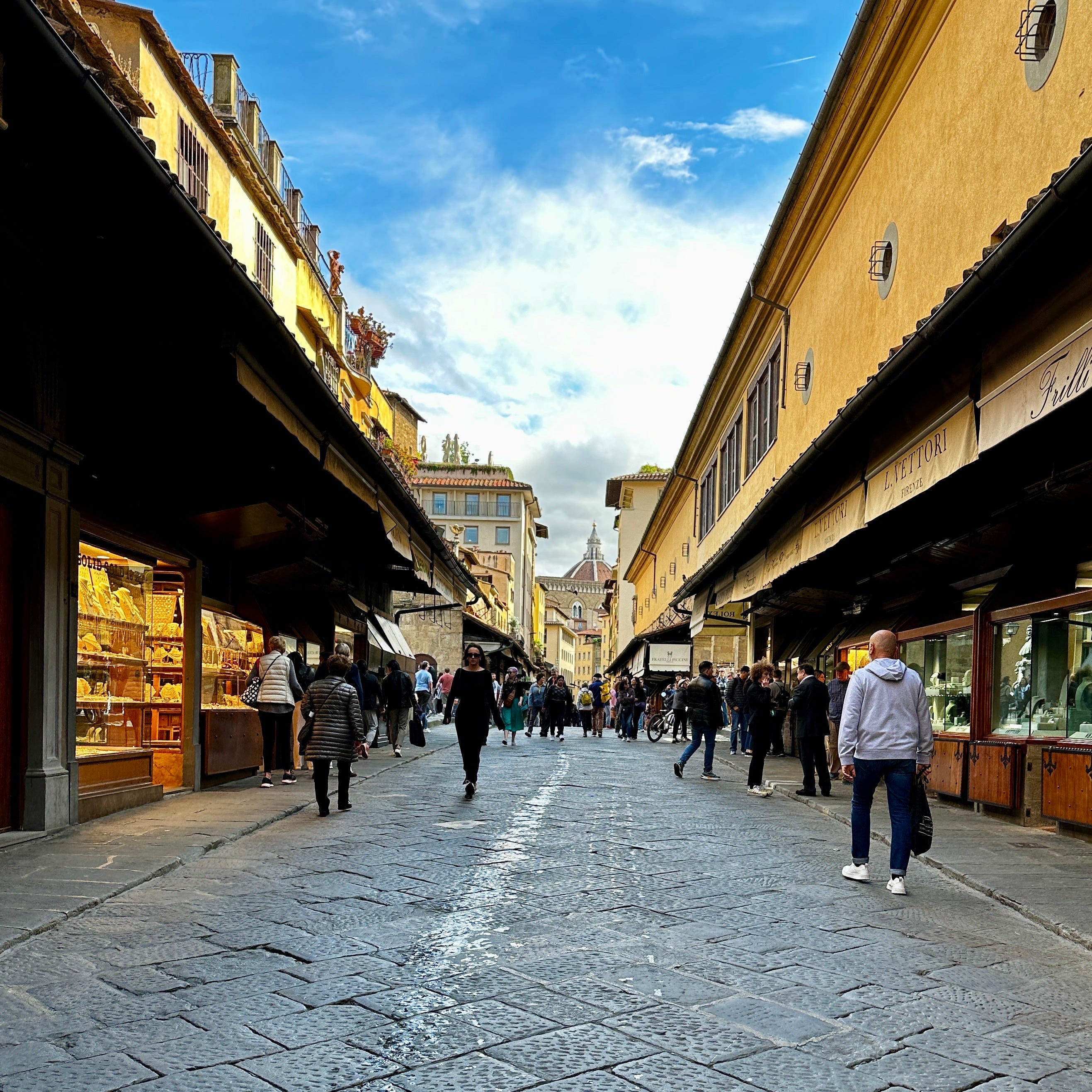
I want to close with an anecdote that illustrates just how powerful place can be. The Medici family were the most powerful people in central Italy, and they set out to usher in an Age of Enlightenment. They helped create the Renaissance. How? By building beautiful cities, and not by accident. They studied Roman and Greek cities and extracted the lessons. What they found was that great places were not happenstance, but a matter of ratios and proportions. City building was a science, not merely an art, and when that science was applied, the results were nearly magical. The cities they designed pulled the Italian Peninsula out of the dark ages and gave rise to some of the most profound invention and creativity our species has ever known. The art, the ideas, the music, the writing produced by a handful of cities during that period is staggering to contemplate, and the fact that we still send our best artists and writers to Florence and Siena to be inspired tells you everything about how much place shapes a life.
So I encourage you, no, I implore you, to think long and hard about the place you choose to rest your head. It will be the single greatest determining factor in the life you lead.
Thank you.